AgriConnect: From Fragmented Farms to Financeable Value Chains

In this episode of Uxolo: In-Depth With, Jessica Brown speaks with Aliou Maiga, Regional Industry Director, Financial Institutions Group, Africa at IFC (World Bank Group), about one of the most ambitious agricultural transformation platforms currently underway: AgriConnect.
Part of the World Bank Group, IFC is the largest global development institution focused exclusively on the private sector in emerging markets. Through investment, advisory services, blended finance and guarantees, IFC works to mobilise private capital into sectors that drive productivity, resilience and job creation.
Born from the World Bank Group’s sharpened mandate under President Ajay Banga - to prioritise job creation as the clearest path out of poverty AgriConnect aims to transform Africa’s fragmented, smallholder-based agricultural sector into a scalable, financeable, job-creating engine of growth.
With Africa holding roughly 60% of the world’s available arable land yet achieving yields only one-third of global averages the opportunity is immense. The question is: how do you make smallholder farming commercially viable?
The answer, according to Maiga, lies in technology-led integration of the entire value chain.
Key themes
Agriculture as Africa’s Largest Jobs Engine
- Agriculture drives 20–40% of GDP in most African economies.
- It supports 40–80% of employment.
- Rural fragility, poverty and food insecurity cannot be addressed without transforming agricultural productivity.
- Jobs - not subsidies are the long-term solution to poverty reduction.
Why African Yields Lag — and Why That Matters
- Average African yields sit at roughly one-third of global averages.
- 90–95% of farmers operate on plots of less than 2–5 hectares.
- Fragmentation has historically made agriculture too complex and costly for banks to finance.
- Traditional large-scale Western farming models do not translate to Africa’s smallholder reality.
What Is AgriConnect?
AgriConnect is a platform that:
- Digitally profiles farmers and their farms.
- Integrates input suppliers, mechanisation providers, insurers and offtakers.
- Secures agricultural insurance to reduce weather risk.
- Connects farmers to banks through structured, data-backed scoring.
- Reduces servicing costs by 80–90% through technology.
- Improves yields - in Morocco’s wheat pilot, income rose nearly 50%.
By connecting all value chain players, AgriConnect de-risks agricultural lending and transforms farmers from subsistence producers into SME businesses.
The “Phygital” Model: Why Digital Alone Isn’t Enough
AgTech in Africa operates on a “phygital” (physical + digital) model:
- Advanced backend technology for monitoring, scoring and analytics.
- Local field agents embedded in communities.
- Real-time farm monitoring via satellite and mobile tools.
- Rapid problem-solving through image-based diagnostics and AI-driven recommendations.
Technology reduces costs. Human agents preserve trust and cultural alignment.
As Maiga notes: “Technology is the lever - but jobs still matter.”
De-Risking Banks - and Eventually Exiting
Pre-harvest lending has historically been seen as high-risk. AgriConnect tackles this by:
- Digitally de-risking value chains.
- Embedding agricultural insurance.
- Using data-backed scoring models.
- Leveraging IFC guarantees to accelerate bank participation.
- Blending concessional capital to lower early-stage barriers.
The goal is not permanent reliance on concessional finance — but building a track record so that commercial banks eventually finance agriculture independently.
“If we are permanently needed, we are not fulfilling our mandate.”
Scaling Ambition
Initial pilots:
- Senegal (early learning phase)
- Morocco: scaled from 500 to 3,000 hectares; targeting 10,000 hectares next campaign
- Long-term ambition: millions of hectares across Africa
The focus is less on headline numbers — and more on building a solution that works, then scaling as fast as capital allows.
Climate Resilience Through Precision
Technology improves:
- Water efficiency (examples of 70% water savings in coffee processing)
- Yield predictability
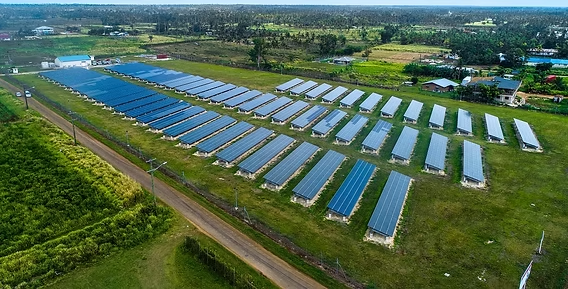
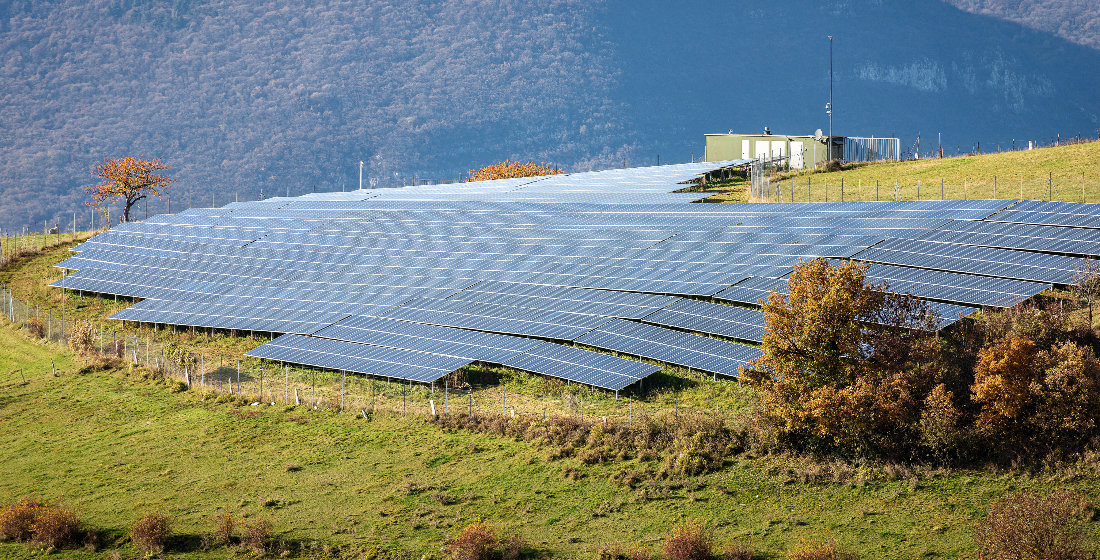
- Solar-powered irrigation adoption
- Reduced diesel reliance
- Climate-risk modelling
- Resource efficiency across value chains
AgriConnect also opens pathways to climate-linked incentives and credits tied to improved water management and sustainable farming practices.
Gender & Inclusion
With women making up 40–50% of agricultural labour across Sub-Saharan Africa, yet producing 13–25% less per hectare due to unequal access to inputs, technology-driven profiling and financing models provide a pathway to:
- More equitable input access
- Transparent credit assessment
- Youth-led agribusiness participation
- Greater formalisation of rural economies
Episode Takeaway
Africa does not lack land.
It does not lack farmers.
It does not lack demand.
It lacks connectivity, data integration and scalable finance models.
AgriConnect demonstrates that when value chains are digitally integrated, risks can be reduced, costs can be lowered, yields can rise — and banks can lend.
Technology is not replacing agriculture.
It is finally making it investable.