Reimagining trade, risk distribution and defence at ITFA Split

At ITFA's annual trade finance event in Split, Croatia, trade finance banks and insurers say they are responding to evolving risk appetites in CEE and beyond. How risk is being priced and distributed, particularly in challenging markets, is a constant preoccupation.

ITFA’s 52nd annual international trade and forfaiting conference in Split, Croatia highlighted a new set of priorities for the trade finance community.
Defence is now an open conversation, spotlit by General Sir Patrick Sanders, a strategic defence adviser to Santander. He paraphrases Antonio Gramsci’s quote, ‘the old world is dying, and the new world struggles to be born: now is the time of monsters.' It is a time of flux, not transition, Sanders says, a new world but no new world order.
The strategic environment is changing structurally, not temporarily. Industrial capacity in the defence sector is subject to huge working capital challenges to meet the needs of defence supply chains and react to fast changing demand. Government procurement demand is cyclical – until suddenly it is not. The prize, Sanders says, is not just to increase supply for elusive quick wins, but to create capacity resilience sufficient to create a long-term deterrent. Supply chains, he says, have been optimised for efficiency not resilience.
Trade routes beyond CEE – TFP in action
Discussion of the evolution of trade corridors beyond Central and Eastern Europe (CEE) provided a map for how trade is being rebuilt and risk management is responding.
Shona Tatchell, director financial institutions, for the European Bank for Reconstruction & Development (EBRD)’s Trade Facilitation Programme (TFP) puts the bank in the middle of that map. The EBRD remit now runs from Mongolia through the Middle Corridor, the Caucasus and Türkiye (Turkey), the Middle East and into sub-Saharan Africa. “Trade is really restructuring,” Tatchell says. Growth is coming from China through Central Asia and the Caucasus, from Mediterranean links into Europe, from sub-Saharan Africa into North Africa, and between Central Asia and Turkey. Belt and Road-era ports and rail are no longer a slogan, they are hard infrastructure carrying real flows, and EBRD is financing them.
TFP, launched in 1999, now works with 143 partner banks. It guarantees confirming-bank risk and supplies liquidity. Open-account and factoring support is rising. In 2025 the programme backed more than €4.6 billion ($5.3 billion) of trade finance. Intra-regional trade is a strategic priority for the EBRD (for instance Turkey–Balkans–Greece, Egypt–Ukraine, and other intra-EBRD pairs). Ukraine remains a core market.
Representing the host country, Liana Keserić, CEO of Raiffeisenbank Croatia, part of Raiffeisenbank International (RBI), describes a shift from cost optimisation to adaptability. Croatian corporates still chase efficiency, but they now add the need for flexibility: fewer single-supplier, single-market bets, more nearshoring, inventory visibility and shorter lead times.
RBI’s CEE product is its footprint. The bank is financing multi-country, multi-supplier structures for the same client group rather than single-country lines. Clients still need trade finance, but they now also want supply chain finance, receivables monetisation, ECA connections and advice. Risk has moved from ‘will this counterparty pay?’ to ‘will they deliver or receive?’ Performance, logistics, sanctions and dual-use screening, cyber and data integrity now sit inside due diligence.
Doubling down on digitalisation and sustainability
Digitalisation is no longer simply optional. Guarantees that once took days now take hours, though letters of credit remain documentation heavy. The market is evolving, but no fully established digital solution covering the whole supply chain has emerged yet. “However, this topic will accelerate in the coming years, and we expect an increasing share of the supply chain to become digitalised,” Keserić says.
However, the public rails (digital identity, UNCITRAL’s Model Law on Electronic Transferable Records (MLETR)-compliant trades, digital customs) still lag. Paper at the port can still undo any digital chain.
Richard Waite, managing director of credit risk solutions at Howden, says that for credit insurance, clients, particularly in the trade finance space, need capacity evidenced rapidly, or the deal can be lost.
In the context of emerging market risk distribution, there was comment that a lot of liquidity is locked within markets, but there is unevenness within supply chains in part because of the asymmetry of digitalisation of information.
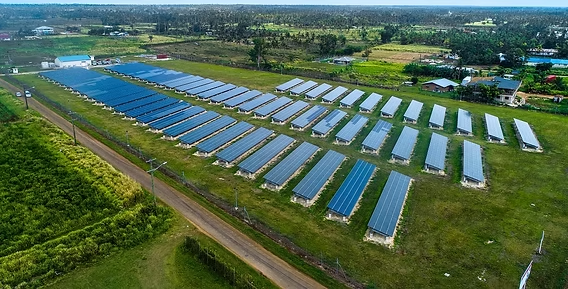
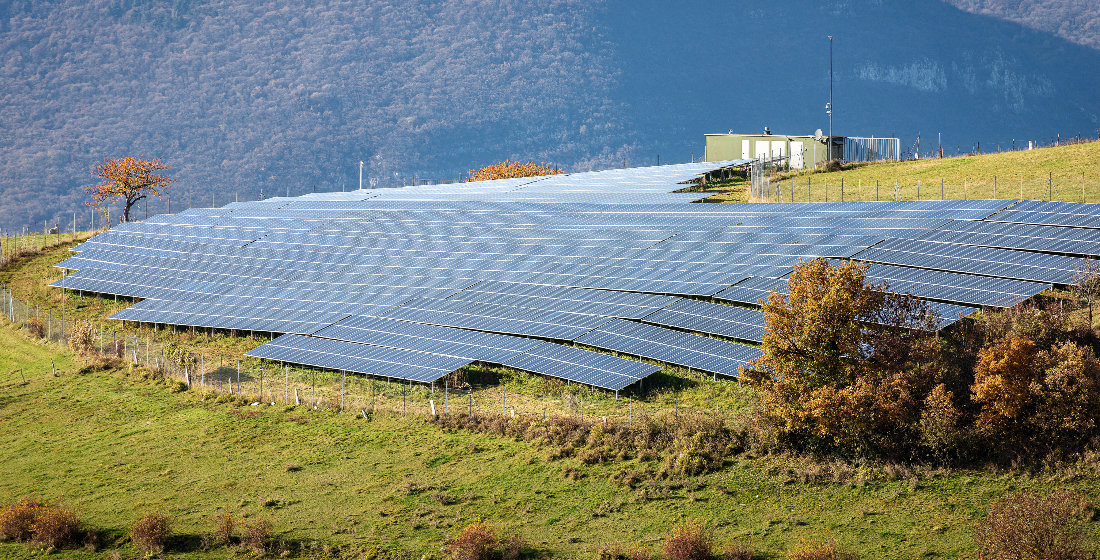
Sustainability has not receded amid geopolitics. Indeed, green TFP has grown. EBRD’s 25 sustainability certifications, if combined with the goods, can qualify transactions as being green eligible, giving pricing discounts and, in some cases, tenors out to five years that draw banks toward certified commodities, energy-efficient projects, solar and wind.
RBI’s Keserić says there is a Mediterranean ‘blue’ book, comprising sea protection and water treatment, what Tatchell calls turquoise [green and blue]. Energy security, Tatchell argues, means decentralised renewables are needed. In Ukraine, multiple small solar and wind sites beat one large one. Ukraine is the only EBRD market where fossil-fuel imports are still supported.
New opportunities, and where insurance helps
Insurance has moved from background comfort to part of the deal architecture. Croatian exporters going into new high-risk markets now combine bank lines with buyer credit or ECA cover. Nonetheless, Waite says CEE banks can utilise credit risk insurance further, that political risk insurance (PRI) demand is escalated and that the rebuilding of Ukraine will require the full ecosystem’s support for at least the next decade.
His wish is for CEE banks to take more risk in developing economies, including Central Asia and sub-Saharan Africa, and to push brokers and insurers harder to support them. “Insurers are there to unlock capital and hence liquidity in new territories – particularly in developing markets where the private market can actually unlock some of those trade or capital flows,” Waite says.
Opportunities lie in the Adriatic as a gateway alternative (particularly a corridor for food and pharma into the Gulf and North Africa), and for reconstruction trade in Southeast Europe and Ukraine. For RBI’s Keserić, the wish is the sequence of discussion, for clients to talk risk and relationship first before finance follows. Tatchell maps trade opportunities in intra-EBRD trade and her wish is for greater collaboration among MDBs, banks and insurers, as well as digital investment and energy-transition incentives that change procurement.
Insurance has moved from mitigation to a core distribution tool. It is fast, capital-efficient and often committed, with risk weightings that can fall from 100-150% toward 20- 50% as one panellist says. Insurers like short, self-liquidating paper and low defaults, but they also ‘underwrite the bank’. Partnership between banks, insurers and agencies needs to be practical and tangible. As one banker says, that means higher early (first loss) retention by the banks to give comfort to insurers and get a track record for the borrower, sharing credit memos and economist reports and detailed in-market visits, that all help unlock capacity that was not there before.
However, institutional money often wants scalable packaging, portfolios, tranche-ing, a track record and a format that can be repeated, not one-off LC confirmations that are hard to wrap for funded buyers. Panellists argue that technology to automate flow should free relationship time. Growth, the panel argues, rests on more investors, faster balance-sheet velocity, and corridors rather than countries as supply chains, energy transition and geopolitics shift.
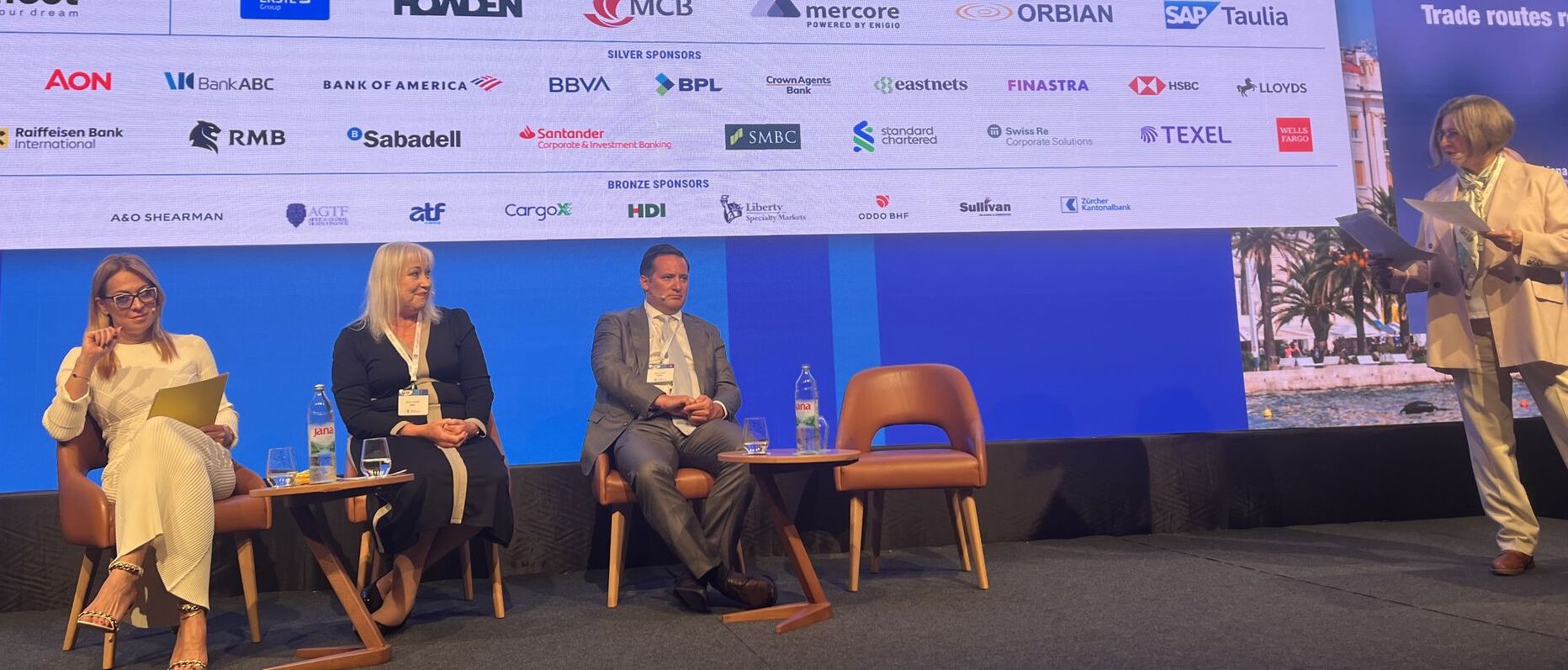 Lisa Keserić, Shona Tatchell, Richard Waite, Katharine Morton (source ITFA)
Risk distribution evolving in emerging markets
In the panel, ‘Are we there yet?’, one speaker noted that trade distribution is ‘making a comeback’ under Basel IV, and that view was on the way to becoming a consensus. ITFA’s member survey notes that 46% of respondents expect Basel IV to increase distribution activity. Panellists say rather than distribution simply being a back-office function, it is now raised much earlier in deal discussions. Originate and distribute is closer to the model now.
Panellists from Standard Chartered, Bank ABC, Mashreq, Deutsche Bank and Santander were blunt that (effective) distribution is what keeps emerging market trade flowing amid capital, country limits and balance-sheet pressure. The credit, country, transfer and legal risks may not be fundamentally different to developed markets, but what is, is the certainty of interpretation, execution, structure and price. That and the onshore versus offshore booking that changes currency, transferability and enforceability.
Local currency funding complexities (particularly the lack of local currency finance) were raised in the pre-ITFA event Congress of Parties (COP), and it is an issue that is not going to go away. Vietnam, Egypt and Ecuador may sit in the same emerging markets bucket but they are not the same. As one panellist says, investors need to underwrite the whole ecosystem, not just the name. “The job on the emerging market distribution side is not about making it risk-free. It’s more about how to break the risk into various components and make them understandable,” they add.
Bring back the CAMPARI?
For some panellists, ‘paper is the new vinyl’. Risk mitigation via the ‘good old LC’ still provides a counter to risk concentration. One banker says that AI has immense untapped benefits, but it doesn’t necessary replace the traditional smell tests and risk evaluation for making lending decisions that were provided under the acronym CAMPARI: ‘Character, Ability (to repay), Means (or Margin – the corporate financial strength), Purpose, Amount, Repayment (schedule feasibility) and Insurance (the security/collateral/guarantees to mitigate default risk)’. Education on these remains core to activities at ITFA.
Trade routes have opened, closed and been diverted for centuries. The themes that run through history from ancient Greece, Rome, Venice, Austro Hungarian empires to this century remain as trade, defence, more trade, offence. At ITFA in Split, celebrating in the shadow of the Roman emperor Diocletian’s palace, more history than can be consumed locally provided a reassuring reminder that trade will continue to be financed, and paid.